
Serving Dallas–Fort Worth
Hose Bib & Yard Line Repair in DFW
Not all of your plumbing lives indoors. The spigots on the wall, the shut-off by the meter and the water line buried across the front yard put up with Texas weather all year, and they wear out too.
- Price given before work starts
- Nothing starts until you approve it
- Repairs tested before we leave
- Work area left clean
The lowdown
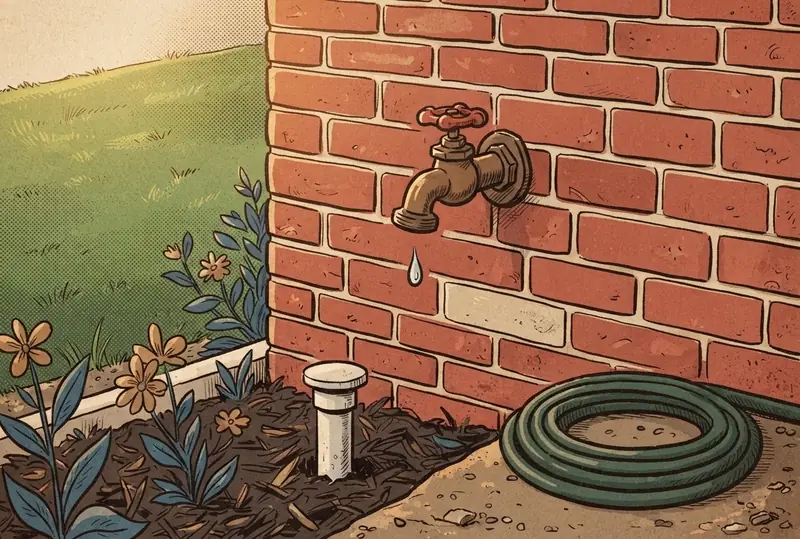
A hose bib is a simple valve with a hard life. It bakes all summer, gets yanked around by the hose, and now and then it freezes. A drip from the spout usually means a worn washer or seat. A leak around the handle means the packing has worn. Water coming out of the brick, or showing up inside the wall when the spigot is on, means the pipe behind it has split, most often after a freeze with a hose still attached.
The yard line is the buried pipe that carries water from the city meter to your house. When it leaks, the lawn shows a soggy or sunken patch, the meter creeps along even with the house valve shut, and each month's bill comes in fatter than the last. The pipe's age and material decide the cure: a patch at one spot, or a brand-new run between meter and house. We also replace main shut-off valves that have seized, because a valve that will not turn is no help on the day you need it.
Outdoor trouble to watch for
- A spigot that drips after it is closed, or sprays from the handle or the cap on top
- Water running down the brick or showing up indoors when the hose is on
- A soggy, sunken or extra-green patch between the meter and the house
- A water meter that keeps turning after the shut-off valve at the house is closed
- A main shut-off valve that is stuck, or leaks when you turn it
Start to finish
How the job goes
Sort out which line it is
House, yard line or sprinkler system. Closing each shut-off in turn while watching the meter tells them apart.
Find the spot
A yard leak is traced along the line and buried utilities are marked first, so the digging happens in one place.
Price the repair or the new line
A patch where the rest of the pipe is healthy, a new run where it is not, with the price settled before any digging.
Test, backfill and tidy
The line is pressure tested, the meter is checked, the hole is filled and the sod goes back where it came from.
Around these parts
Outdoor Plumbing in North Texas
North Texas winters are mostly mild, which is why outdoor plumbing here gets caught unprepared. Hard freezes do arrive every few years, and a hose left on the spigot traps water in the valve, where it can freeze and split the pipe. The damage often stays hidden until the first warm weekend, when someone turns on the hose and water runs inside the wall. Unhook hoses before a freeze and cover the spigots. In summer the clay soil shrinks and shifts, and that movement is hard on buried yard lines, especially at the joints.
Fair questions
Plain answers about outdoor plumbing
How do I get my hose bibs ready for a freeze?
Unscrew every hose, drain it and put it away. Then fit an insulated cover over each spigot. If your home has a separate shut-off valve for the outdoor faucets, close it and open the spigots to drain them. A frost-free spigot only protects itself when the hose is off, because a connected hose keeps water trapped in the barrel.
Who fixes a leak between the meter and my house?
As a rule, the city or water utility looks after the meter and everything on the street side of it. From the meter inward, the pipe is the homeowner's. If the leak is at the meter box itself, contact your water utility first. If it is on your side, that is a plumbing repair.
Should I patch the leak or replace the whole yard line?
One leak on an otherwise healthy line is worth a spot repair. A second or third leak on the same pipe says the material is wearing out, and each new patch only moves the next leak a few feet along. At that point, replacing the whole run out to the meter usually costs less than a string of repairs.